
InsightsApprovals
Who approves a villa in Dubai, and in what order.
Three different bodies approve a villa in Dubai, and they do not approve the same thing or at the same time. Getting the order wrong is the delay that stops everything else.
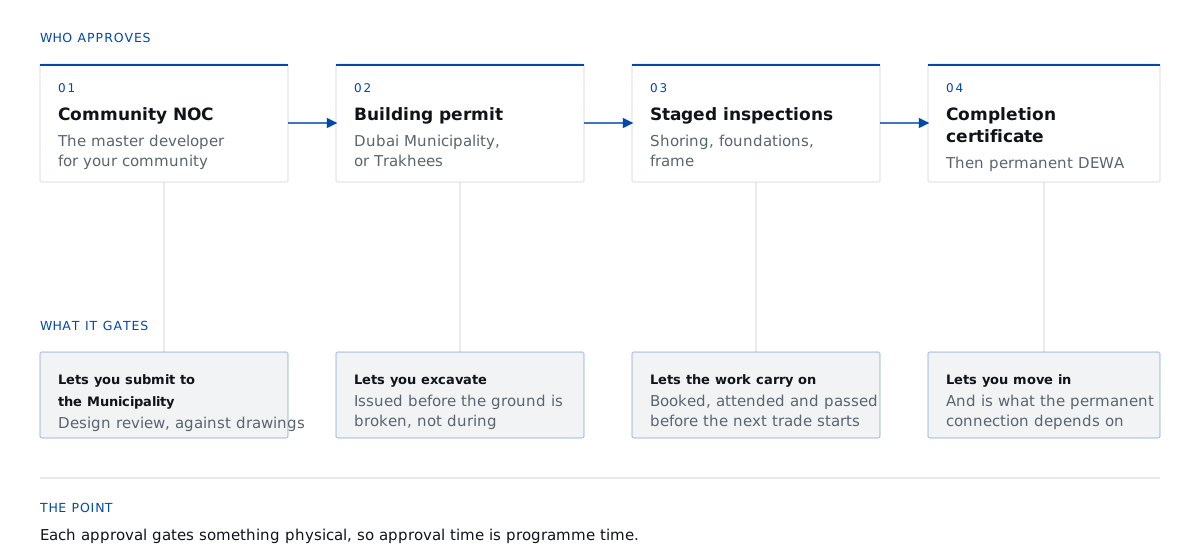
Approvals are programme time. They are not administration that happens quietly alongside the build, and a programme that does not show them is a programme that has not been thought through. The sequence below is the one that matters, because each approval gates something physical.
In short
- Establish which authority your plot falls under before anything else. It is not always Dubai Municipality.
- The community no objection certificate normally comes before the Municipality submission, not after.
- The building permit gates excavation. Nothing starts without it.
- The completion certificate gates occupation and the permanent DEWA connection.
Three approvers, three different jobs.
It helps to be clear about what each body is actually deciding.
- Dubai Municipality decides whether the design is compliant and safe, issues the building permit, inspects at set stages during construction, and issues the completion certificate at the end. On some freehold developments this role sits with Trakhees instead, which is why the first question on any plot is which authority governs it.
- The master community developer decides whether what you are building fits the rules of that particular community: heights, setbacks, materials, colours, boundary treatment. Emaar, Nakheel, Meraas, DAMAC and Dubai Properties each run their own process, and they are not interchangeable.
- DEWA decides when you get power and water, temporarily during construction and permanently at the end.
None of the three will tell you what the other two need. Coordinating them is part of what a main contractor is for, and it is one of the things we mean by what we take responsibility for.
Before anyone can dig.
Two things have to be in place before excavation, and they are sequential rather than parallel.
First, the community no objection certificate. The master developer confirms that your design complies with the rules of the community your plot sits in. This is a design review, so it happens against drawings, and it is the point at which a design gets sent back if it breaks a setback or a height.
Second, the Dubai Municipality building permit. Architectural, structural and services drawings are submitted through the Municipality's online system by a registered consultant. The technical departments review and issue comments, those comments are resolved, and the permit follows. Soil investigation and a topographic survey are normally part of the submission.
The permit is issued before excavation, not during it. This is worth stating plainly because it is the single most common assumption we see: that a site can be mobilised while the permit is being processed. It cannot.
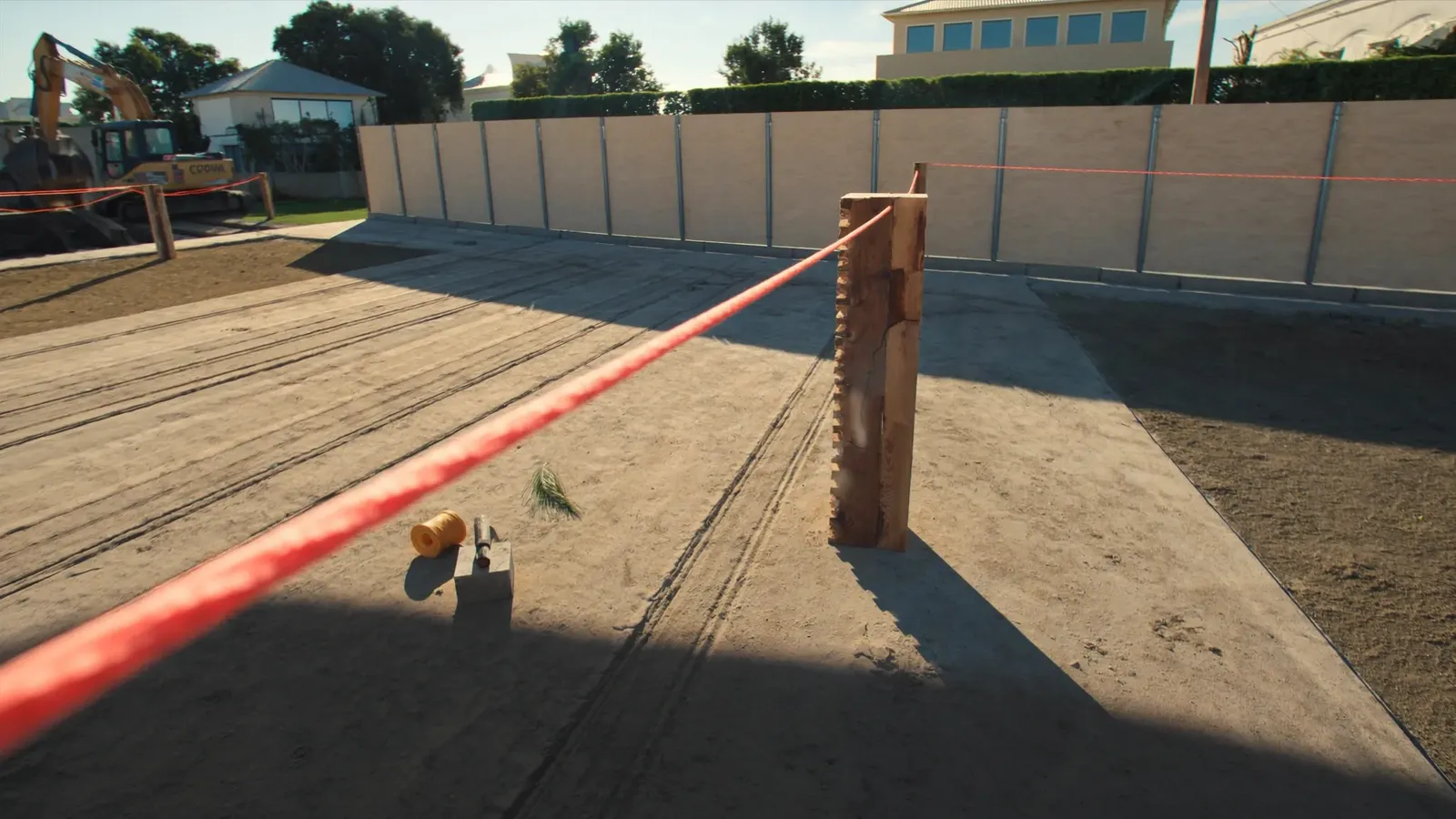
An approval you assumed is a delay you have already had. You just do not know about it yet.
During the build.
The permit is not a single gate. The Municipality inspects at points during construction, and those points are chosen for the same reason we inspect at them: they are the moments before something gets covered over. Shoring and excavation, foundations, and the concrete frame all attract inspection.
Practically, this means the programme has to leave room for an inspection to be booked, attended and passed before the next trade starts. A frame that is poured and ready is not a frame that can be built on if the inspection has not happened. This is the same dependency logic as the trade sequence itself, with an external party added to it.
Any change to the approved design needs re-approval. Moving a wall, adding an opening or changing the external treatment after the permit is issued is a variation to a permitted design, not a site decision. Building it first and regularising it later is the expensive route.
Before anyone can move in.
At the end, the sequence tightens again. The final Municipality inspection leads to the building completion certificate, and the completion certificate is what the permanent DEWA connection is gated on. Civil Defence sign-off and approved as-built drawings are normally part of the same set.
So the last stretch of a villa programme is not "finishing, then hand over". It is finishing, then final inspection, then completion certificate, then permanent connection, then occupation. Each of those has a duration, and a programme that treats them as a single line at the end will be wrong by weeks.
It is also the stretch where the snag list should already be closed rather than opening. That argument is closing snags before handover, not after.
Common questions.
Who approves a villa build in Dubai?
Three bodies, each approving something different. Dubai Municipality approves the design and issues the building permit, and inspects the work at set stages. The master community developer issues a no objection certificate confirming the design meets that community's own rules. DEWA approves and connects the permanent electricity and water supply. On some freehold developments the authority is Trakhees rather than Dubai Municipality, so the first thing to establish is which one your plot falls under.
Does the community NOC come before or after Municipality approval?
Before, in almost every case. The master developer's no objection certificate confirms that what you intend to build complies with the community's own design rules, and Dubai Municipality will normally expect to see it as part of the submission. Applying to the Municipality first tends to mean submitting twice.
When does DEWA get involved in a villa build?
Twice. A temporary supply is arranged early so the site can work. The permanent connection comes at the end and is gated on the completion certificate, so it is one of the last things to happen rather than something that can be brought forward.
What is a building completion certificate?
The certificate Dubai Municipality issues once the build has passed its final inspection. It is what permits occupation and it is what the permanent utility connection depends on. A villa without one is finished in appearance only.
Processes change. Authority requirements, systems and fees in Dubai are revised periodically. Treat this as the shape of the process rather than as a current checklist, and confirm the detail against the authority for your plot at the time you submit.