
ContractingSixteen trades
General contracting.
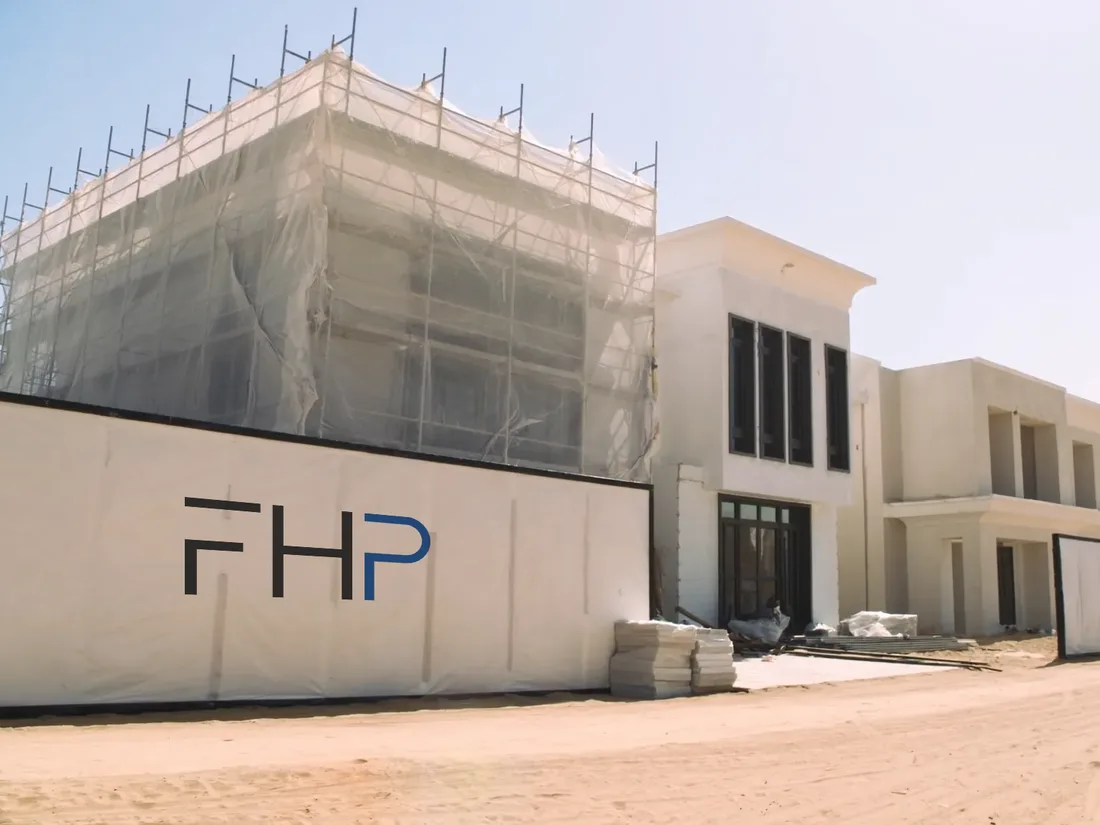
We manage and execute the whole project: a private villa, a residential building, a commercial property, or a renovation of something already standing.
Four lines of work.
Every trade on a site belongs to one of four lines. FHP runs all four under one contract, in one sequence, to one standard.
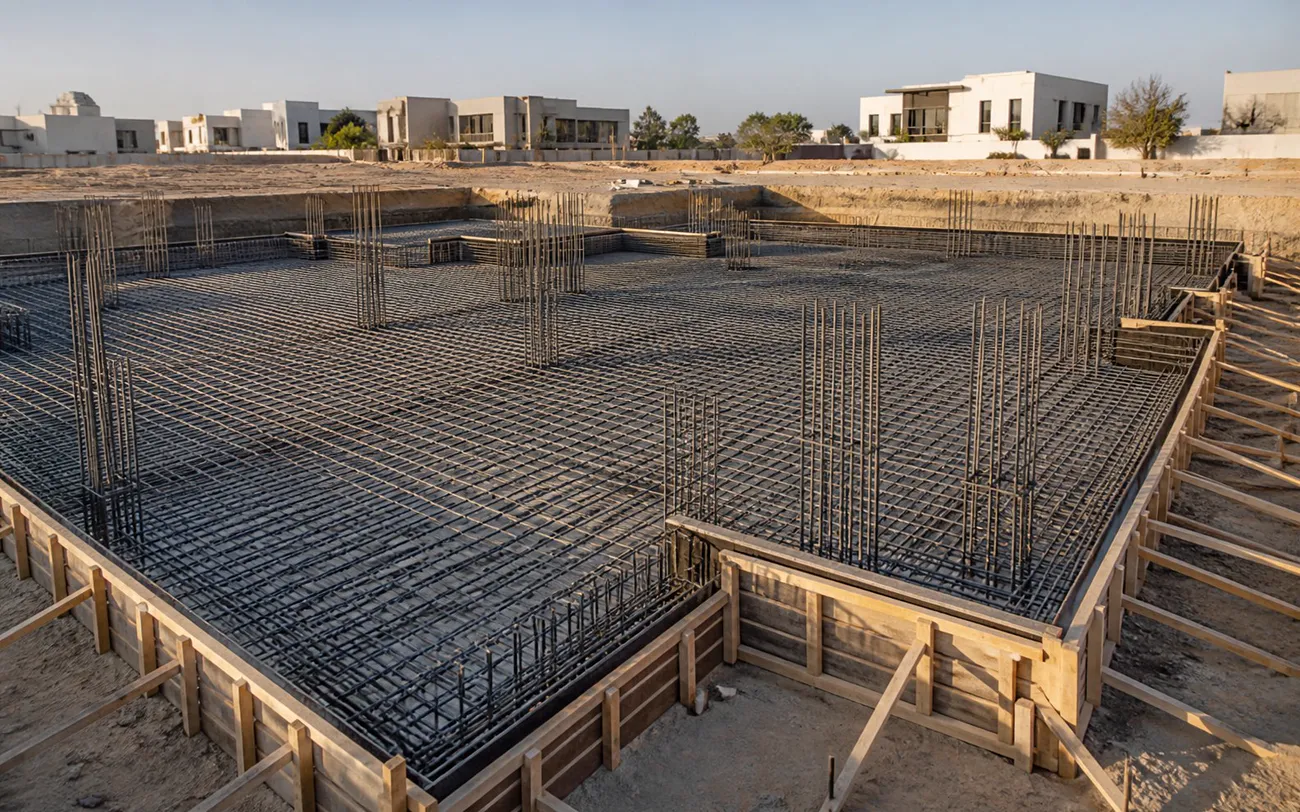
Civil and structure
Enabling works, foundations, the concrete frame and blockwork. The part of the job everything else stands on, and the part that is hardest to correct later.
See the trades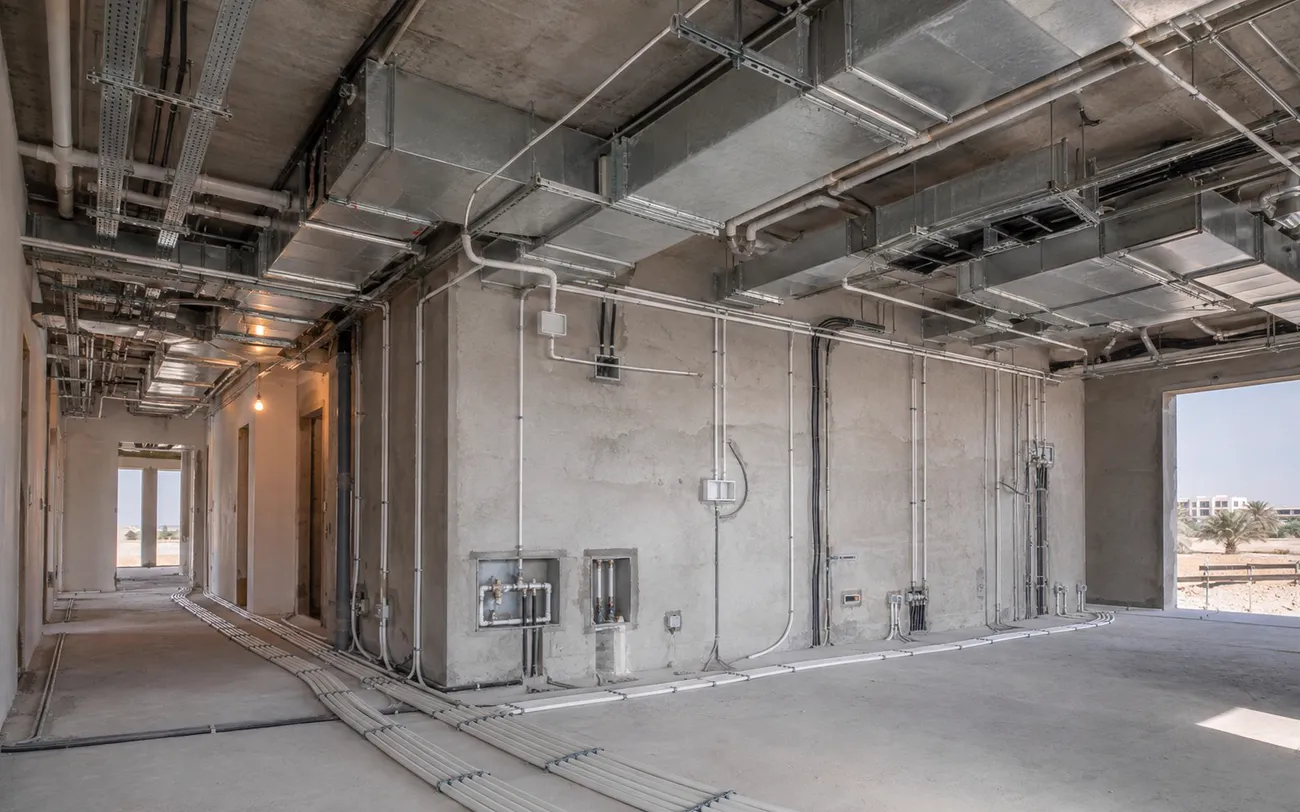
MEP
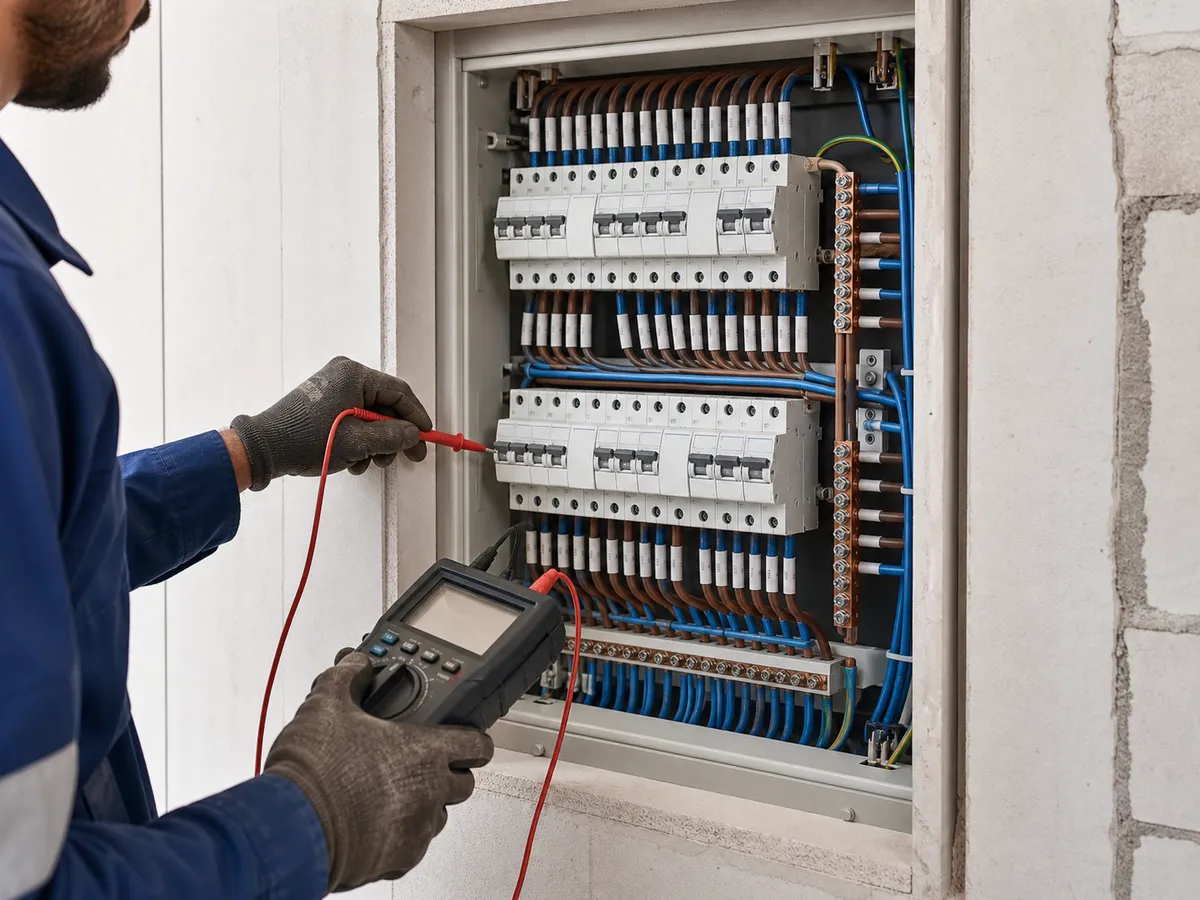
Electrical, plumbing, drainage, air conditioning and fire. Installed in the order the finishes need, and tested before anything closes them in.
See the trades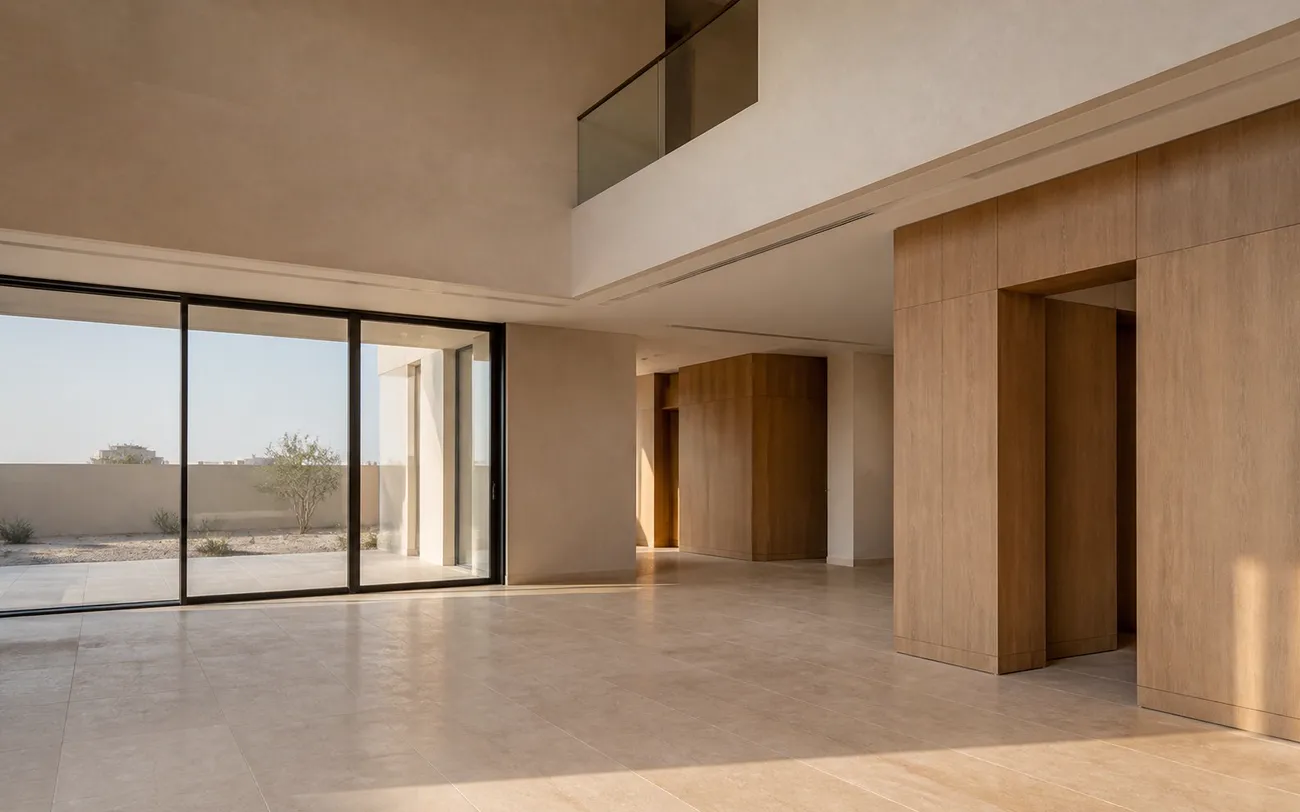
Finishing
Plaster, screed, tiling, stone and paint. Where a build is judged by the people who live in it, so where our checks are tightest.
How we finish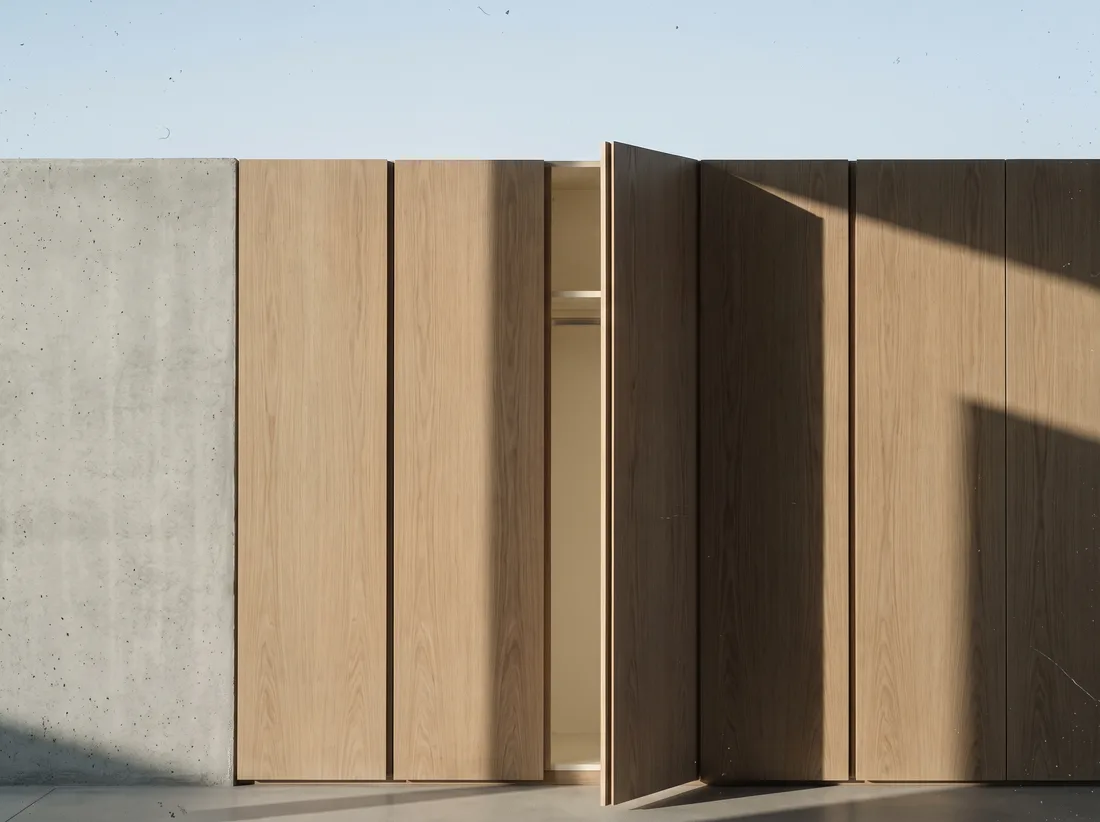
Fit-out and joinery
Partitions, ceilings, doors, wardrobes, kitchens and aluminium. The last trades in, and the first ones anyone sees.
See the tradesWe build, and we renovate.
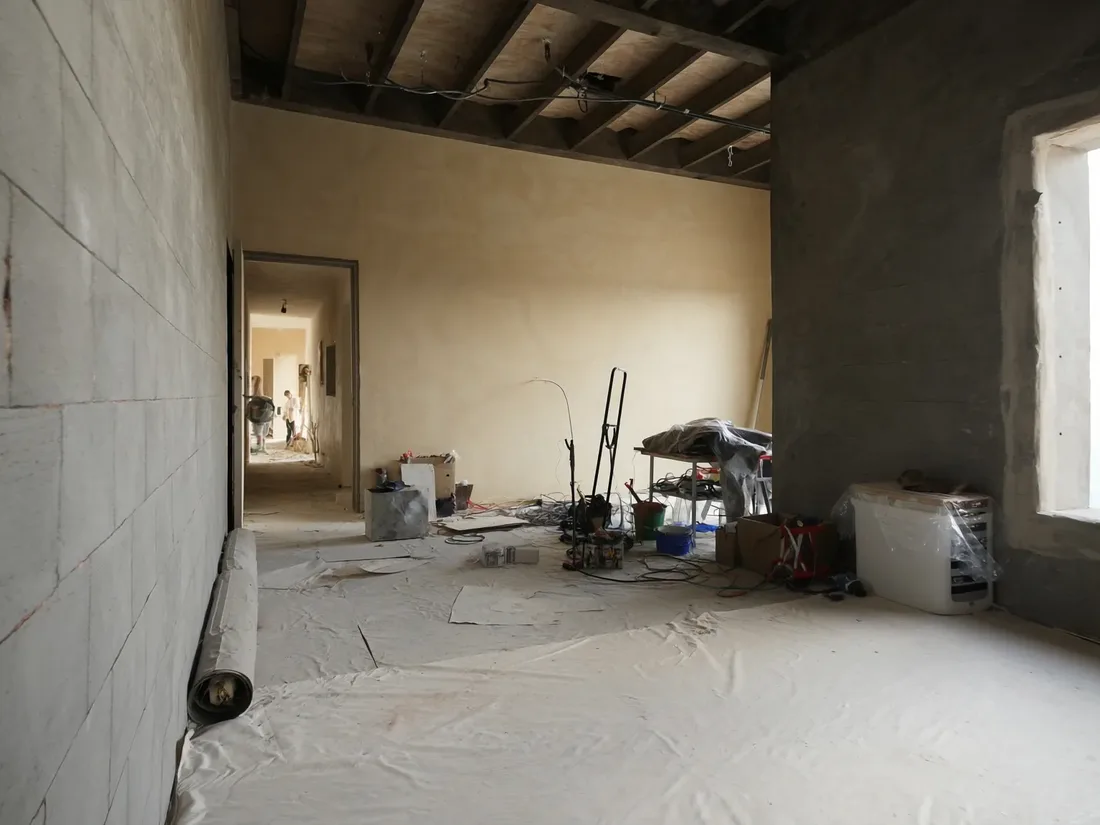
The same four lines, carried out on a building that is already there. Renovation is not a smaller new build. The structure is a given, the services are already inside the walls, and there is usually someone still living or trading around the work.
Survey before scope
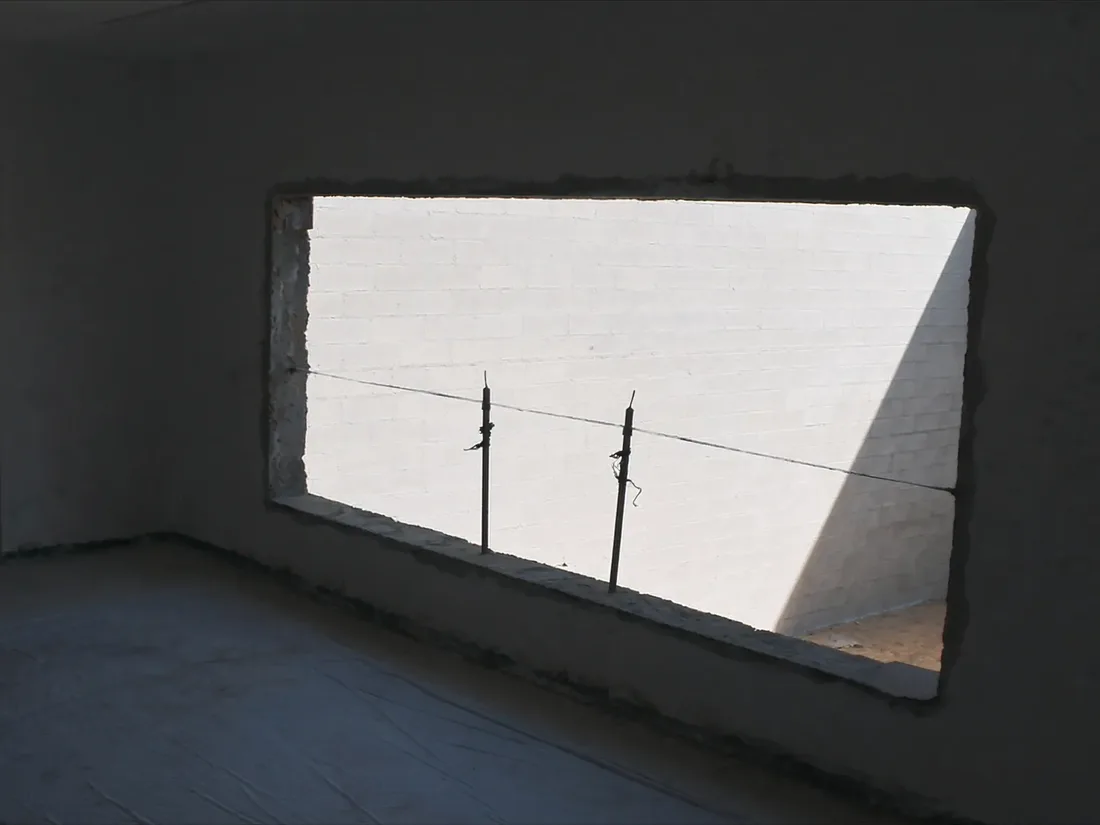
We open up and look before we price. What is behind a plaster wall decides half the job, and a scope written without knowing is a scope that changes.
Structure, then services
Alterations propped and carried first, then the electrical, plumbing and cooling brought up to what the building is used for today.
Built around occupation
Sequenced, hoarded and cleaned so a house stays liveable or a unit stays open, rather than treating the place as an empty site.
Refurbishing the inside is often the whole point of a renovation. Interiors, furnishing and landscape run on the same contract.
What we take responsibility for.
Our role is to run the project from start to finish. That means the trades, the people on site, the sequence they work in, and the standard the work is left at.
Coordination
Trades and subcontractors booked against one sequence, so the plasterer is not waiting on the electrician and neither of them is waiting on us.
Programme and cost
A written scope and a dated programme before work starts, and the same document used to report progress while it runs.
Quality and safety
Checks at the points where a mistake gets covered up, and a site kept in a condition the people working on it are safe in.
Sixteen trades.
These are the trades we cover on a project. On most jobs we run all of them; on a package we run the ones you need. We have written up every trade on a villa, in the order they work.
- 01
Civil and structural works
Excavation, reinforcement, formwork and concrete: foundations, columns, slabs, stairs and retaining walls.
- 02
Blockwork and masonry
Internal and external walls laid to line and level, with lintels, ties and movement joints where they belong.
- 03
Plastering and rendering
Internal plaster and external render taken to a true flat surface, because every finish after it inherits this one.
- 04
Waterproofing
Tanking to substructure, wet areas and roofs, tested before anything is laid over the top of it.
- 05
Flooring and tiling
Screeds, large format tile, stone and timber, set out from the room so the cuts land where nobody looks.
- 06
Painting and decoration
Preparation, filling and cutting in, with the number of coats the surface actually needs.
- 07
Electrical works
Containment, wiring, distribution boards, fixtures, earthing, and testing before the walls close.
- 08
Plumbing and sanitary works
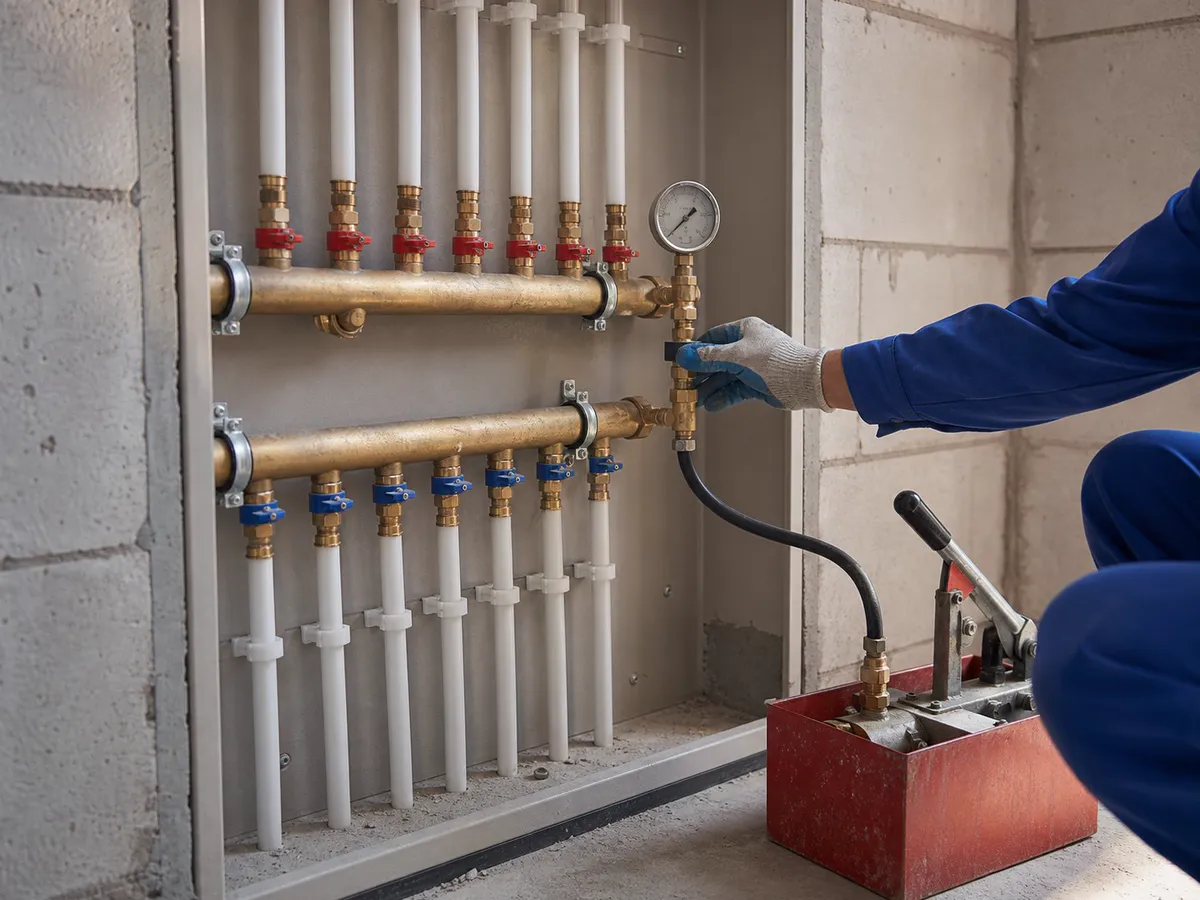
Hot and cold supply, drainage, sanitaryware, and pressure testing while the pipework is still reachable.
- 09
HVAC and air conditioning
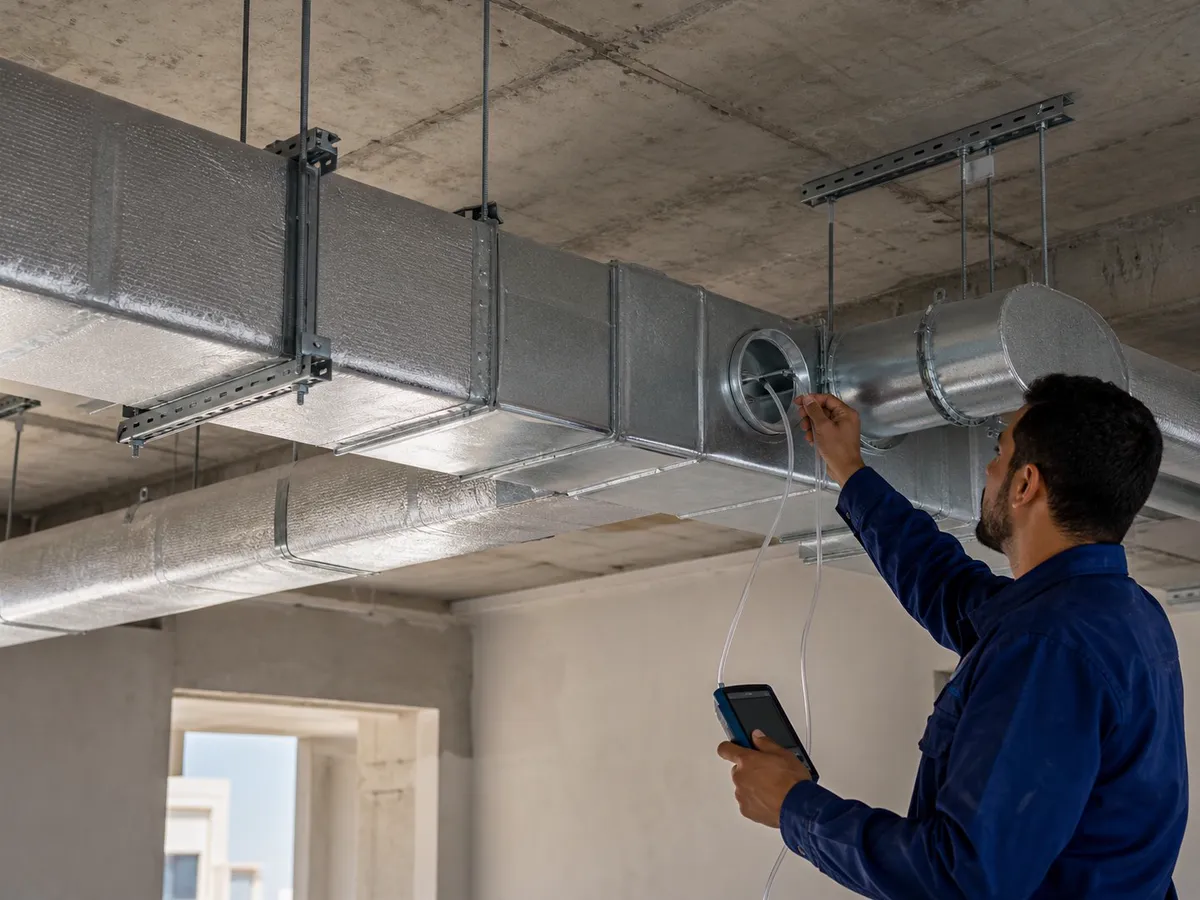
Ductwork, fan coil units, grilles and insulation, then balancing and commissioning.
- 10
False ceilings and gypsum works
Metal stud, board, bulkheads and access panels, level right across the room, not just at the edges.
- 11
Carpentry and joinery
Doors, wardrobes, kitchens and bespoke units, grain matched, hung and set with even gaps.
- 12
Aluminium and glass works
Windows, sliding systems, balustrades and screens, squared, sealed and running properly.
- 13
Facade works
External render, cladding and finishes, with the access and edge protection that work needs.
- 14
Landscaping and external works
Hardscape and paving, falls and drainage, irrigation, planting and boundary works.
- 15
General finishing works
The last part of the job: shadow gaps, seals, silicone lines, ironmongery and the details people touch.
- 16
Renovation and refurbishment
Strip out, alterations and rebuilding inside a property that is already standing and often still occupied.
How a project runs.
The same sequence every time, whether it is a villa on an empty plot or two floors of an occupied building. Approvals sit inside it rather than beside it: who approves what, and in what order.
Site visit and brief
We walk the plot or the property with you, and read the drawings if there are drawings yet.
Scope and price
A written scope, trade by trade, saying plainly what is included and what is not.
Programme
Dates for each stage, sequenced so no trade is standing waiting for another one.
Mobilisation
Approvals, site set up, access and safety arrangements in place before work starts.
Execution
Work in sequence, with inspection at the points where a mistake would get covered over.
Snagging and handover
The snag list closed before handover rather than argued about after it, then the keys.

Finishing is where a build is judged.
Structure is either right or it is not, and it is hidden either way. What a client lives with is the plaster, the tile joints, the door gaps and the silicone lines. We treat the last five per cent as part of the work, not as a list to argue over at the end, which is why we go into closing snags before handover at length.
The same argument carries past the finishes into what fills the room. Interior design, furnishing and landscape are run on the same contract, so nobody is coordinating a designer against a builder.