
InsightsContracting
Every trade on a villa, in the order they work.
Sixteen trades run on a villa, and each one waits on the one before it. This is what each one needs from the trade in front, and what it costs when the order is not held.
A contractor is not a trade. It is the one party that answers for every one of them, and most of that answering is about order. A villa is not built by doing sixteen things well. It is built by doing sixteen things in a sequence where each one leaves the next one something it can work on.
In short
- The programme is the sequence. A date is what falls out of it, not what drives it.
- Almost every trade is waiting on a surface, a level or a test from the trade before it.
- The expensive failures are the ones that get covered over, not the ones you can see.
- A trade brought forward to look busy is usually a trade that will be done twice.
The order is the programme.
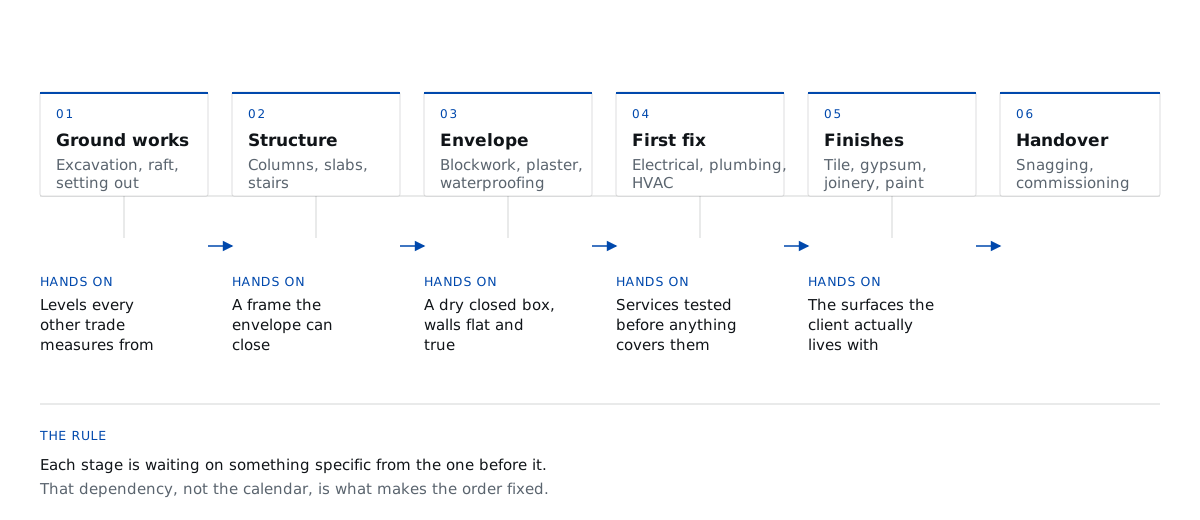
On a villa the work falls into six stages, and the stages are not a filing system. They are a dependency chain. Ground works produce the levels everything is set out from. Structure produces the frame the envelope closes. The envelope produces the dry, closed box the first fix runs inside. First fix produces the services that the finishes bury. Finishes produce the surfaces the client actually sees. Handover is where the whole thing is proved.
Run in that order, each trade arrives to find what it needs already there. Run out of order, and at least one trade is working on something that is not ready, which means it will either do a worse job or come back and do it again.
This is why we describe the work as sixteen trades under one contract rather than as a list of services. The list is not the point. The order is.
A programme is a sequence with dates attached, not a set of dates with work attached.
What each trade is waiting for.
It is worth being concrete about the dependencies, because they are the reason a delay in one trade is never contained to that trade.
Ground works and structure.
Excavation, setting out and the raft come first because every level on the job is measured from them. If the setting out is wrong, it is wrong for the whole build, and nothing downstream can correct it. Reinforcement and formwork follow, then the columns, slabs and stairs. Concrete cannot be hurried by putting more people on it. It cures at the rate it cures.
Envelope.
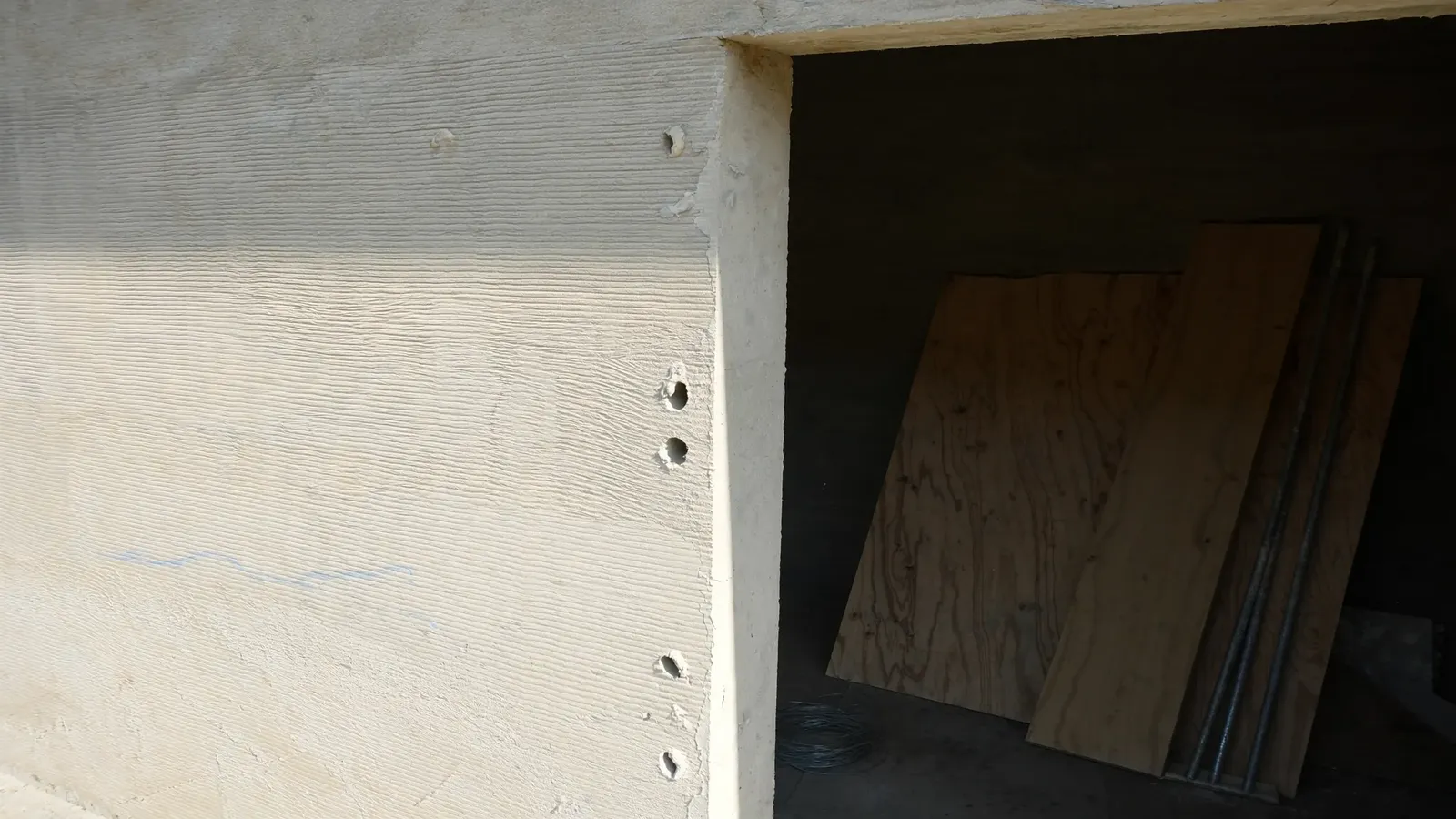
Blockwork closes the frame, plaster takes the walls to a true flat surface, and waterproofing goes to substructure, wet areas and roofs. Plaster matters more than it looks: every finish laid after it inherits its flatness. A wall that is two millimetres out will show in the tile joints and again in the door gaps, and by then the plasterer has left.
First fix.
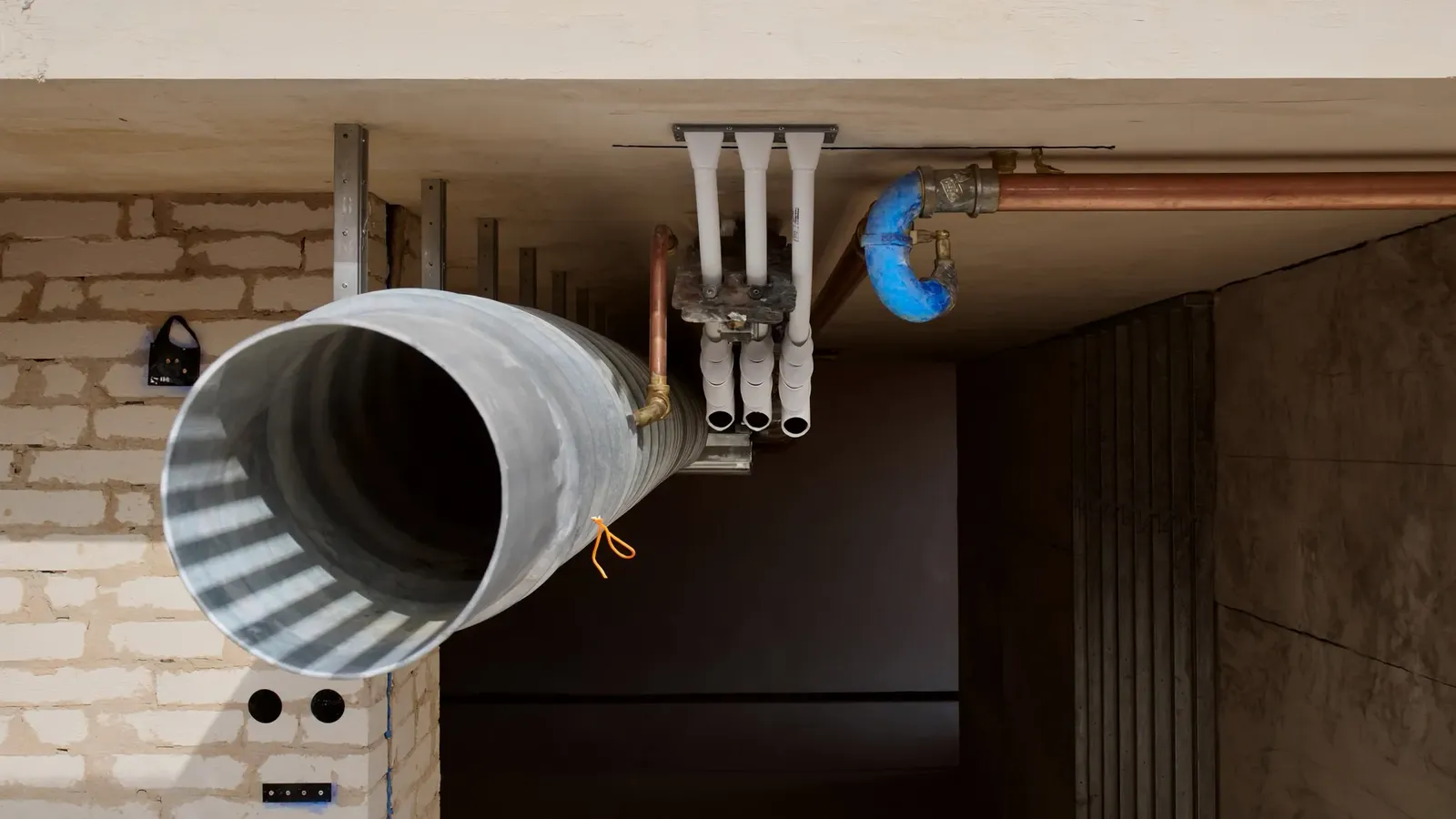
Electrical containment and wiring, hot and cold supply, drainage, ductwork and fan coils all run while the walls and ceilings are still open. This is the stage where the sequence is least forgiving, because the whole point of first fix is that it happens before it is covered. Anything not installed now is either chased into a finished wall later or left out.
Finishes and handover.
Screeds, tile, stone, gypsum, joinery, aluminium and paint, then facade, landscaping and commissioning. The finishing trades are the ones the client lives with, and they are also the ones with the least room to absorb someone else's delay, because they sit at the end of the chain.
Where the sequence breaks.
Sequences rarely break because someone forgot the order. They break for four reasons, and all four are predictable.
- A decision arrives late. Tile, sanitaryware, ironmongery and joinery all have to be chosen before the trade that installs them is booked. A choice made during first fix is usually a choice that moves finishes.
- A long lead item was not ordered against the programme. Aluminium systems, lifts and imported stone are ordered against a date, and if that date was not read off the sequence, the trade arrives and the material does not.
- A trade is brought forward to look busy. Putting the tiler on a floor that is not ready produces a tiled floor that comes up again. Visible activity is not progress.
- An approval was assumed rather than obtained. This is the one that stops everything, and it is the subject of who approves what, and in what order.
The float belongs in the middle, not the end. A programme with all its slack parked at handover is a programme that has no slack, because by the time you reach the end the risk has already happened. We hold the float where the risk actually sits, which on a villa is usually first fix and long lead items.
Reading a programme properly.
If you are given a programme for your villa, three things tell you whether it is real.
- Does each trade have a predecessor? A bar that starts on a date with nothing feeding it is a wish. A bar that starts when the trade in front finishes is a plan.
- Are the approvals on it? Permits and inspections take time and that time is programme time, not administration that happens invisibly alongside.
- Are the procurement dates on it? If the programme shows the tiler in week thirty but not the tile order in week eighteen, nobody has thought about it yet.
A programme that survives those three questions is one you can plan around. That is what we mean by how a project runs: dates for each stage, sequenced so no trade is standing waiting for another one, and when something moves you hear it from us first.
None of this makes a build faster. It makes it predictable, which on a villa is worth more.